
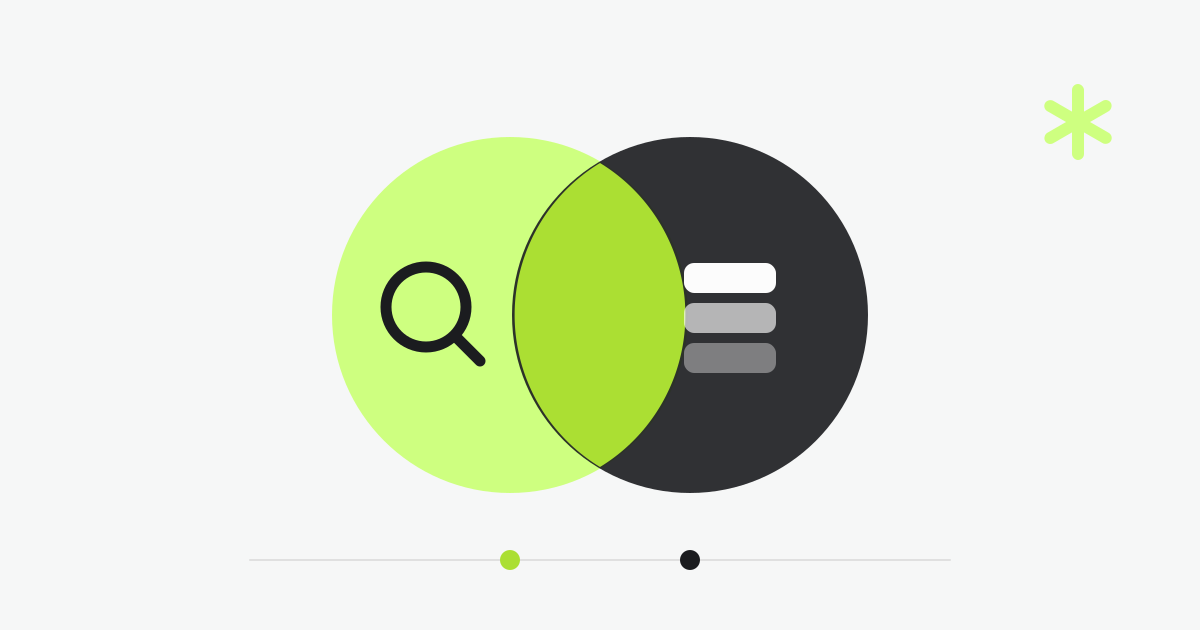
This question usually arrives already framed as a competition, as though one platform is simply better. They are not competing. They do different jobs, and which one fits depends almost entirely on a single question about your business.
The difference in one sentence
Google catches people who are already looking for what you sell. Meta interrupts people who were not looking at all.
That is the whole distinction, and nearly every practical consequence follows from it. On Google you are answering an existing question, so the person is further along and closer to buying — which is why those clicks cost more and convert better. On Meta you are creating the thought in the first place, so the audience is enormous and cheap and much less ready.
When Google is the right first move
Google fits when demand already exists and your problem is being found at the moment it surfaces. The clearest signal is urgency: nobody browses Instagram and decides on impulse to fix a burst pipe. They search, and they call one of the first credible results.
Google is usually the stronger starting point when:
- People search for your service by name — plumber, dentist, locksmith, accountant
- The need is urgent or time-bound, so the decision happens in minutes
- You serve a defined area and can be found within it
- What you sell is hard to explain in a picture
- You need enquiries now rather than a pipeline in three months
One thing worth knowing: for local searches, a properly filled-out Google Business Profile often does more work than the ads do, and it costs nothing. If yours is thin, fix that before you spend anything.
When Meta is the right first move
Meta fits when nobody is searching for you, because they do not yet know the thing you sell exists or that they want it. If your service is discretionary, visual, or new, search volume will be low and Google will feel like an empty room.
Meta usually earns its place when:
- The product looks good — interiors, food, salons, events, anything visual
- It is a want rather than an emergency, so the decision can be prompted
- You can describe your customer by life stage, interest or circumstance better than by what they type into a search box
- You are launching something people do not know to look for
- You want to stay in front of people who visited and did not act
That last point is the most underrated use of Meta for a local business. Showing a reminder to people who already visited your site is generally the cheapest advertising available to you, because you are talking to people who have already shown interest.
What both need before you spend anything
This is the part that gets skipped, and skipping it is how advertising budgets disappear without trace. Ads do not create customers. They rent attention and deliver it to a page. If the page does not convert, you have paid for visitors and bought nothing.
Before a single click is paid for, you need:
- A page that matches the ad — if the ad says emergency callouts, the page opens with emergency callouts, not your company history
- An obvious next step, visible without scrolling on a phone
- A site fast enough that people who clicked are still there when it loads
- Some way to know which clicks became enquiries, or you are guessing
- Enough patience to leave it running long enough to learn something
If any of those are missing, fixing them will do more for your return than any amount of campaign tuning. The five failure points are covered in more detail in why customers leave without calling.
What "enough budget" means
The most common mistake is spreading too little across too much. A small budget split between two platforms, five services and three areas produces no meaningful data on any of them, and you end up concluding "ads do not work for us" on the basis of nothing.
Better: pick one platform, one service, one area. Run it long enough to see a pattern. Most local businesses we work with start somewhere between €500 and €1,500 a month, but the right number depends on your margins and what one customer is worth — which is why we recommend a figure only after we have seen both.
Ad spend goes to Google or Meta, not to your agency. It should sit in your own account, in your name, and you should be able to see it.
How to tell whether it is working
Platform dashboards report clicks, impressions and cost per click. None of those are the number you care about. The number you care about is what one enquiry costs you, and whether that is less than an enquiry is worth.
To get there you need three things most small campaigns never set up: a way to record when someone actually enquires, a rough idea of how many enquiries become customers, and the average value of a customer. With those, cost per enquiry becomes cost per customer, and the decision to keep spending or stop becomes arithmetic rather than a feeling.
Two practical warnings. Phone calls are the most common blind spot for local businesses — if most of your enquiries arrive by phone and nothing is recording them, your dashboard will show a campaign that failed while your phone rings. And judge results over a long enough window that a single quiet week does not read as a trend.
Running both
Once one platform is genuinely working, the two combine well: Meta creates awareness among people who were not looking, and Google catches the ones who go and search for you afterwards. The effect is real, and it is also why attribution gets messy — the search click takes the credit for a decision the Meta ad started.
That is a good problem, but it is a second-year problem. Start with one. Make it work. Then widen.
If you are not sure which of the two your business is, that is a short conversation rather than a long project — book a free call and we will tell you which we would start with and why.
Written by Coltera


 No Pressure
 15-30 min. call
 Clear next steps